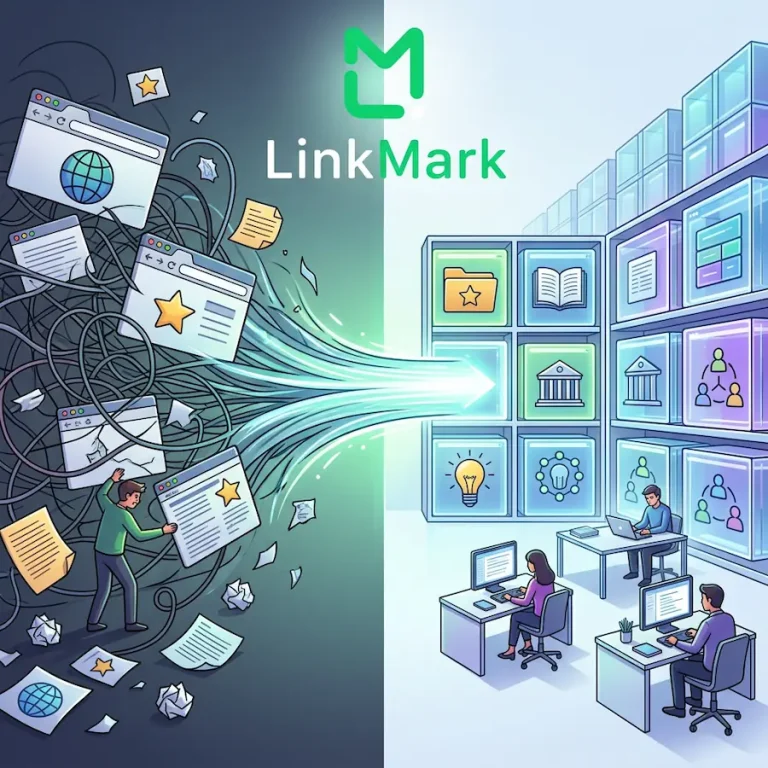



In a world overflowing with articles, resources, tools, and endless tabs, productivity doesn’t come from consuming more — it comes from organizing better. Many people use link-saving tools as simple storage spaces, dumping everything in one place and hoping to revisit it someday. But when used strategically, LinkMark can become more than a storage tool. It can transform into a structured productivity system that supports your focus, decision-making, and execution.
The difference isn’t in saving links. The difference is in building a system that works for your mind.
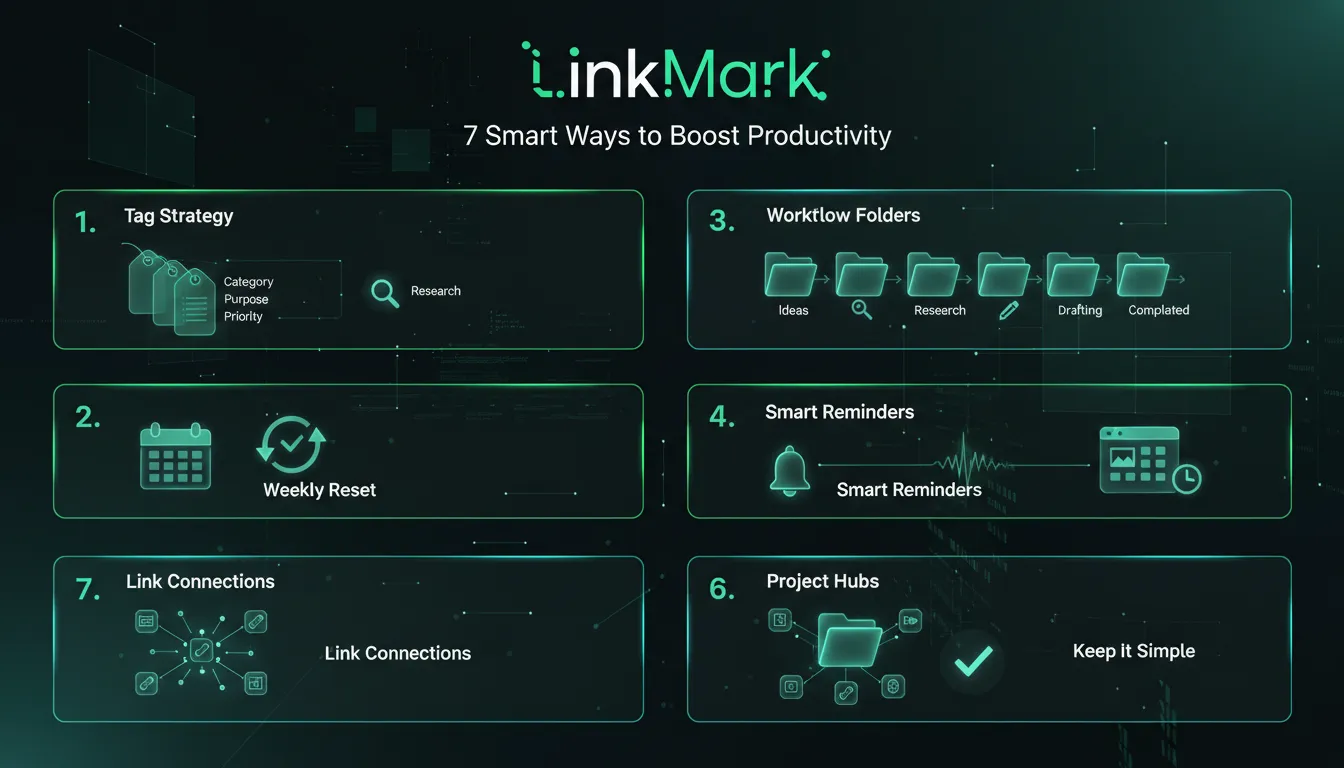
1. Use Tags Strategically, Not Randomly
Tags are powerful — but only when they follow a clear logic. Instead of adding random labels, structure your tags into three intentional layers: Category Tags (Marketing, Development, Design, Business), Purpose Tags (Learn, Implement, Research, Reference), and Priority Tags (High, Medium, Later).
This layered approach allows you to filter information instantly. Instead of searching manually, you can combine tags and surface exactly what you need in seconds. Over time, this transforms LinkMark from a collection of links into a searchable knowledge engine.
2. Turn Folders into Workflow Stages
Folders shouldn’t just classify information — they should reflect your thinking process. Instead of generic folders, try using workflow-based naming such as Ideas to Explore, Ready to Apply, In Progress, and Completed & Archived.
This structure allows you to track the lifecycle of ideas. You’re not just storing content; you’re moving it forward. That sense of visible progress increases motivation and helps you avoid stagnation.
3. Schedule a Weekly Reset
Even the best systems break down without maintenance. Set aside 20 minutes once a week to review new links, remove what’s irrelevant, refine tags, and reorganize folders if needed. This small habit prevents digital clutter from building up and keeps your system lightweight and effective.
Productivity isn’t about creating a perfect system once — it’s about maintaining a clean one consistently.
4. Use Reminders to Reduce Mental Load
One of the biggest productivity killers is relying on memory. If a link requires action, attach a reminder to it. Whether it’s a course you want to start, a tool you need to test, or research you must revisit — let the system notify you.
This reduces cognitive load and frees up mental space. Instead of remembering everything, you trust your system to surface the right information at the right time.
5. Connect Related Links to Build a Knowledge Network
The real power of LinkMark appears when you stop thinking in isolated links. When two articles relate to the same topic, connect them through tags, notes, or shared folders. Over time, your saved links evolve into a personal knowledge network — a connected structure that mirrors how your brain works.
Instead of random bookmarks, you build a growing map of insights.
Read more: LinkMark: The Smart Library for Your Digital Links
6. Create Project-Based Resource Hubs
Before starting a new project, create a dedicated folder in LinkMark and collect everything related to it: references, tools, competitors, tutorials, inspiration. This eliminates tab overload and prevents distraction.
When everything you need is centralized, your focus improves dramatically. You spend less time searching and more time executing.
7. Keep the System Simple
Many people overcomplicate productivity systems. They create dozens of folders, excessive tags, and rigid structures that become overwhelming. Start simple. Adjust gradually. Improve based on real usage.
The best system is not the most complex one — it’s the one you actually use.
Final Thoughts: From Storage to Strategy
Productivity is not about working longer hours. It’s about reducing friction between intention and action. The faster you can access what matters, the easier it becomes to execute consistently.
LinkMark is not just a place to store links. When used thoughtfully, it becomes a strategic thinking environment — one that protects your focus, organizes your knowledge, and supports your goals. When digital chaos disappears, clarity takes its place. And clarity is where true productivity begins.