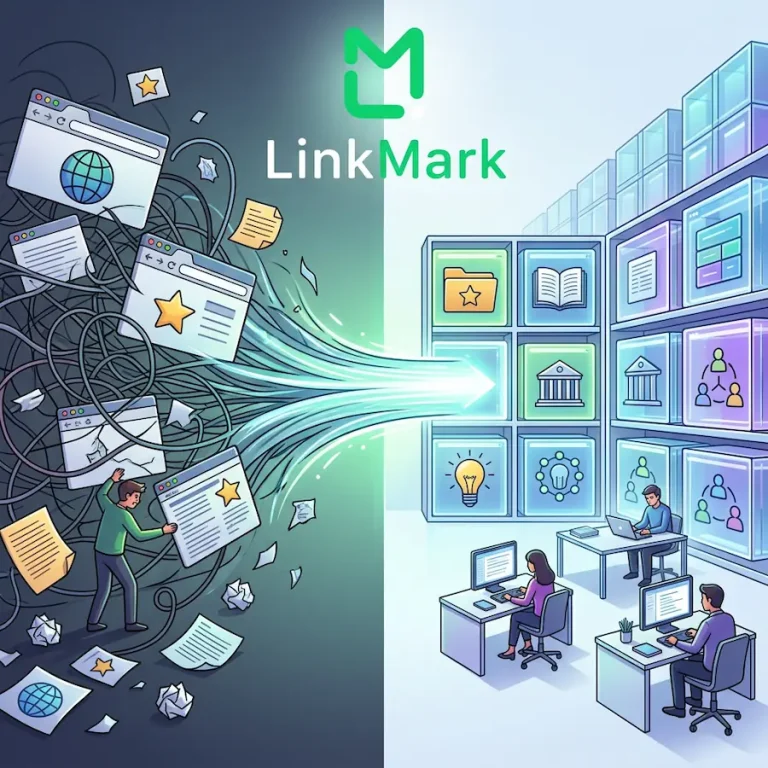


You find something valuable online. An article that explains an idea clearly. A tool that could improve your workflow. A resource you know you will need again. You save the link quickly, confident that you can return to it whenever necessary. In that moment, the act of saving feels sufficient. The problem feels solved.
Yet days or weeks later, when you try to find that same link, it is gone. Not technically deleted, but practically lost. It might be buried in an overcrowded bookmarks bar, hidden inside an unnamed folder, lost between dozens of open tabs, or sitting somewhere in a chat thread you cannot remember. The frustration is familiar. The intention to save was there. The system to retrieve was not.
Losing favorite links is rarely about carelessness. It is about structure. Most people do not lack motivation to stay organized. They lack a reliable framework that turns saving into sustainable organization.
The Illusion of Saving
Saving a link creates a false sense of completion. The brain registers the action as progress. You clicked “Bookmark.” You copied the URL. You sent it to yourself. It feels productive. But saving alone is not organizing. It is merely postponing a decision.
Without structure, saved links accumulate in the same way unopened emails do. They form a quiet backlog. Over time, this backlog becomes intimidating. Instead of revisiting saved resources, we avoid them because finding anything requires effort. The system begins to feel heavier than helpful.
Fragmentation Is the Real Problem
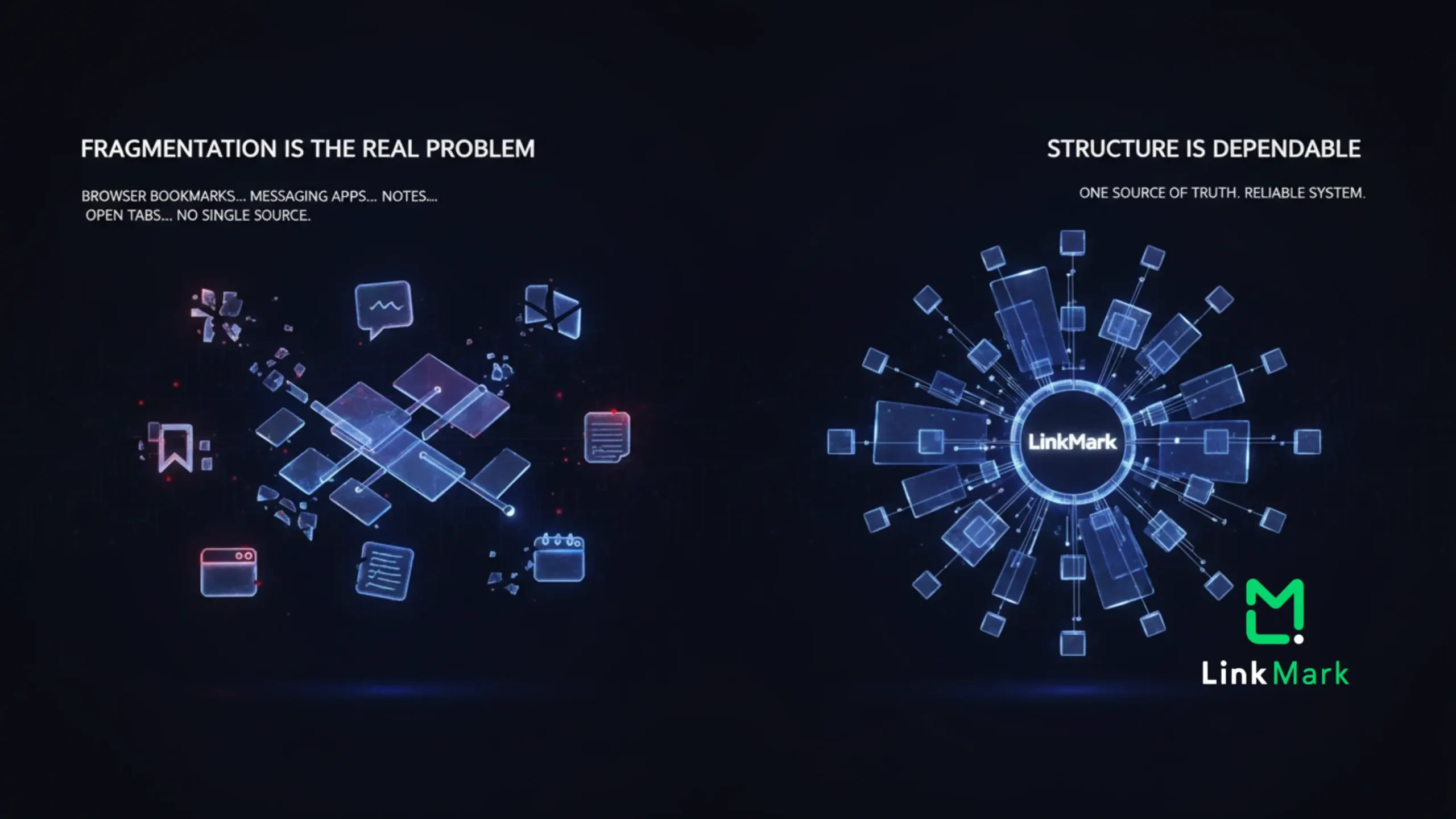
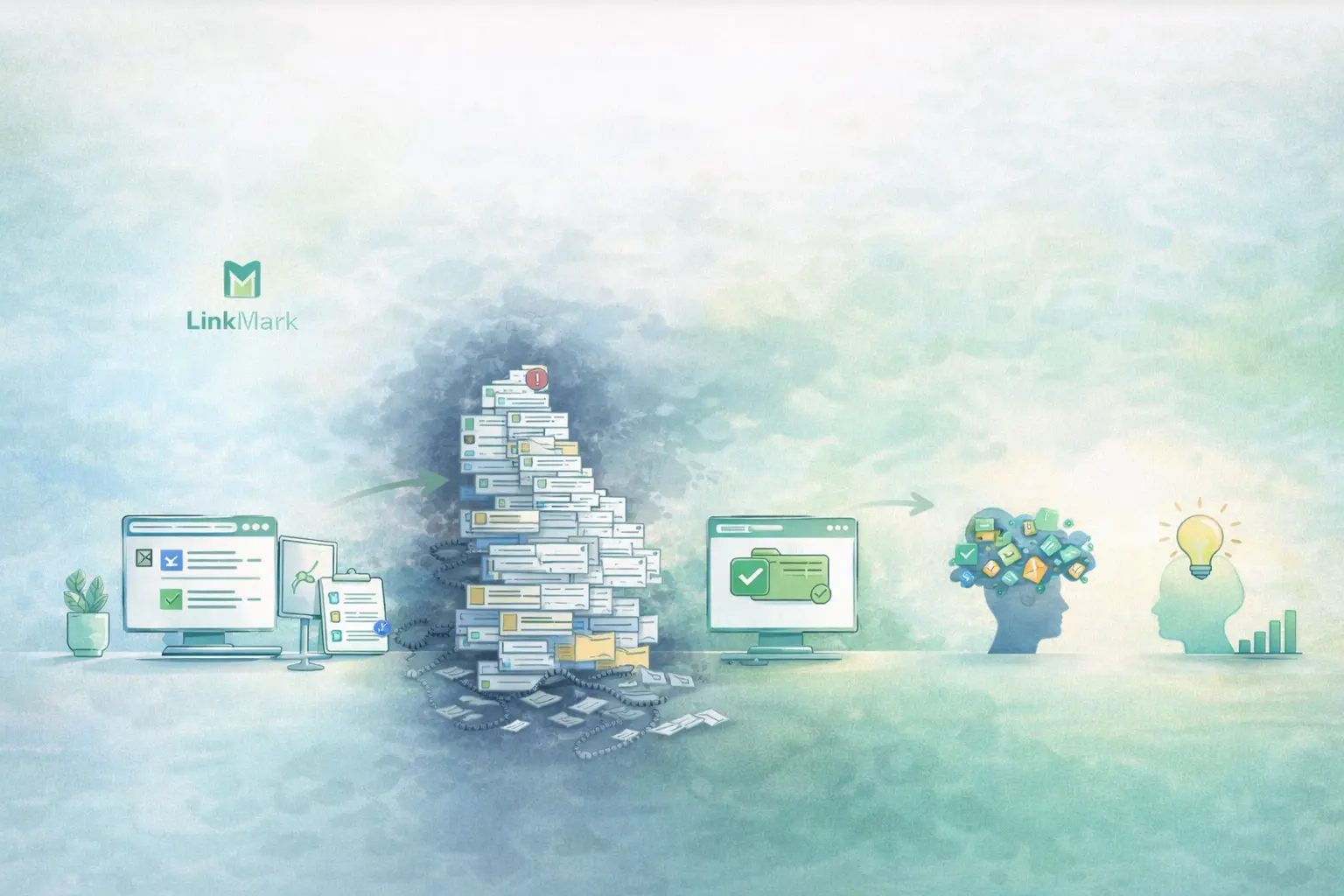
One of the biggest reasons links get lost is fragmentation. Some are stored in browser bookmarks. Others live in messaging apps. Some are saved in notes. Others remain open in tabs for days. There is no single source of truth.
When information is scattered across multiple platforms, retrieval depends on memory rather than structure. You try to remember where you saved it instead of relying on a consistent system. Memory is unreliable. Structure is dependable.
Too Many Folders, Not Enough Clarity
Ironically, over-organization can be just as harmful as no organization. Many users create dozens of nested folders in their bookmarks, believing detailed categorization will solve the problem. Instead, it increases friction. You hesitate before saving because you are unsure where the link belongs.
Over time, categories overlap. A link about design productivity could belong in “Work,” “Learning,” or “Inspiration.” The uncertainty slows action. Eventually, links are saved randomly just to move forward. The structure collapses under its own complexity.
The Psychology of Digital Clutter
Digital clutter affects more than convenience. It impacts confidence. When you repeatedly fail to retrieve saved resources, you subconsciously stop trusting your system. You save less intentionally. You rely more on re-searching content instead of building a personal archive.
This cycle wastes time. Searching again for something you already found feels inefficient, yet it becomes easier than navigating an unreliable structure. Over time, valuable information fades from your workflow simply because accessing it feels difficult.
Why Traditional Bookmarking Fails
Traditional bookmarking systems were not designed for modern information volume. Today, we consume more content in a week than we once did in months. A static folder structure struggles to keep up with this pace.
Bookmarks often lack context. They store URLs, but not intention. Why did you save this link? For research? Inspiration? A future project? Without context, even organized folders feel abstract. The link becomes just another item in a list.
From Saving Links to Managing Knowledge
The real shift happens when you stop thinking about links as isolated URLs and start viewing them as pieces of a personal knowledge system. Each saved link should have a place within a broader structure. It should be retrievable not only by location, but by meaning.
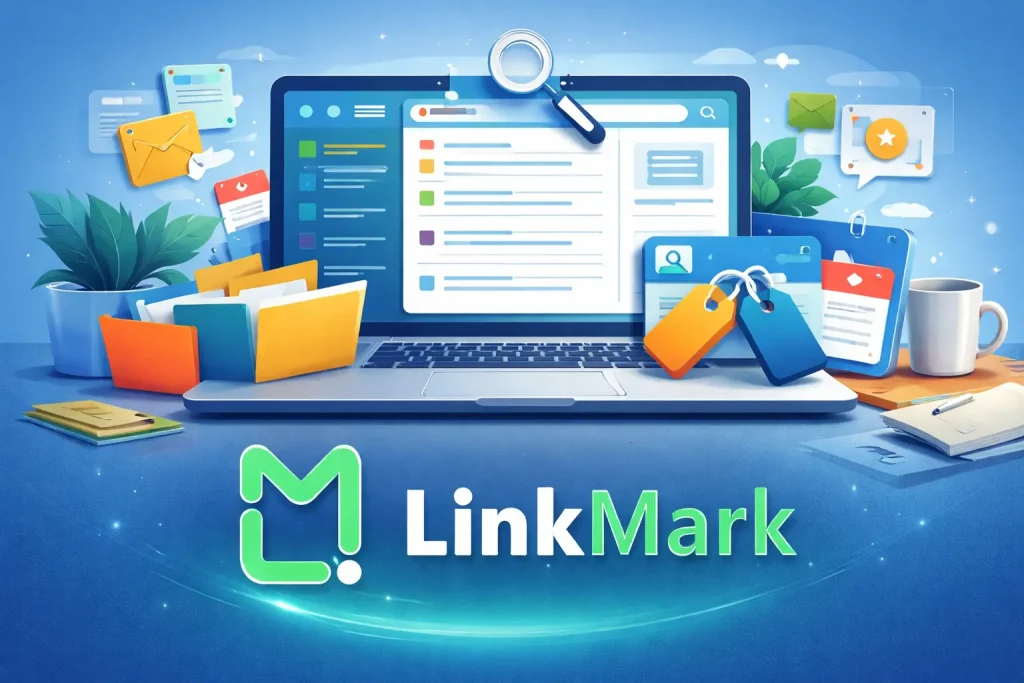
This is where a structured system like Linkmark changes the experience. Instead of acting as a passive storage space, it becomes an active framework. Folders provide clarity without overwhelming detail. Tags create flexible connections. Retrieval becomes intentional rather than accidental.
Read more: How LinkMark Changed the Way I Work Every Day?
Structure Reduces Decision Fatigue
When your system is simple and predictable, saving becomes effortless. You know where the link belongs. You know how to tag it. The action takes seconds, not minutes. More importantly, you trust that you will find it later.
That trust transforms behavior. Instead of hoarding links, you curate them. Instead of fearing clutter, you maintain clarity. Structure reduces the mental friction that often leads to abandonment.
The Long-Term Advantage of Organization
An organized link system compounds in value over time. Each saved resource strengthens your personal library. Each tag builds a network of related ideas. Retrieval becomes faster because patterns emerge naturally.
When links are structured properly, they stop being temporary references and become long-term assets. They support projects, learning, and decision-making. Instead of losing valuable resources, you build a reliable digital memory.
Conclusion
We do not lose our favorite links because we are careless. We lose them because saving without structure creates fragmentation, clutter, and retrieval friction. The solution is not saving more carefully. It is organizing more intentionally.
By shifting from scattered bookmarking to structured management, you transform isolated URLs into a coherent system. When structure supports your habits, your digital environment becomes lighter, clearer, and more dependable. And once you trust your system again, saving a link truly means keeping it.