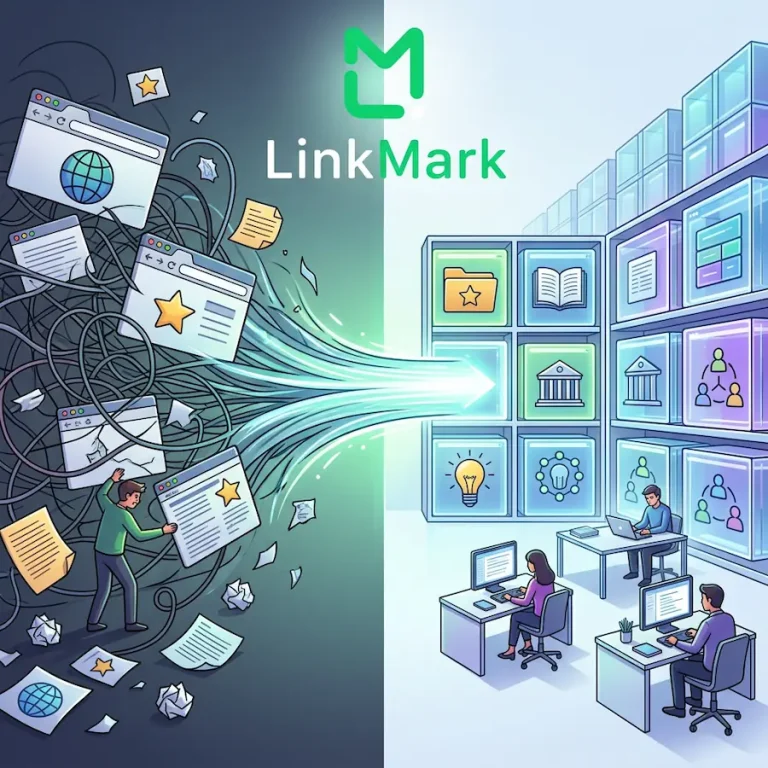



At first glance, saving links feels like progress. If you come across something useful, click ‘Save’ and move on. It’s quick, effortless, and gives you the sense that you’re building something valuable. But after a while, that collection starts to feel different. What once looked like a resource becomes a scattered list of disconnected pieces.
The problem isn’t the links themselves—it’s what they never become. They remain random, unstructured, and difficult to use. And without transformation, even the most valuable content stays locked in that state.
When Random Becomes Unusable
Randomness works in the moment. You don’t need structure to save something quickly. But over time, randomness creates friction. You forget why you saved something, struggle to recognize it. You spend more time searching than using.
This is where most systems fail—not at saving, but at scaling.
The Gap Between Saving and Using
There’s a critical gap between collecting information and actually using it. Saving is passive. Using requires clarity, context, and accessibility.
Without these elements, your saved links stay idle. They exist, but they don’t contribute to your work or thinking.
What Makes Knowledge Reliable
Reliable knowledge is not just stored—it’s structured. It’s easy to understand, quick to access, and ready to apply.
This means every piece of information needs to answer simple questions instantly: What is this? Why does it matter? When should I use it?
LinkMark 2026 Bridges the Gap
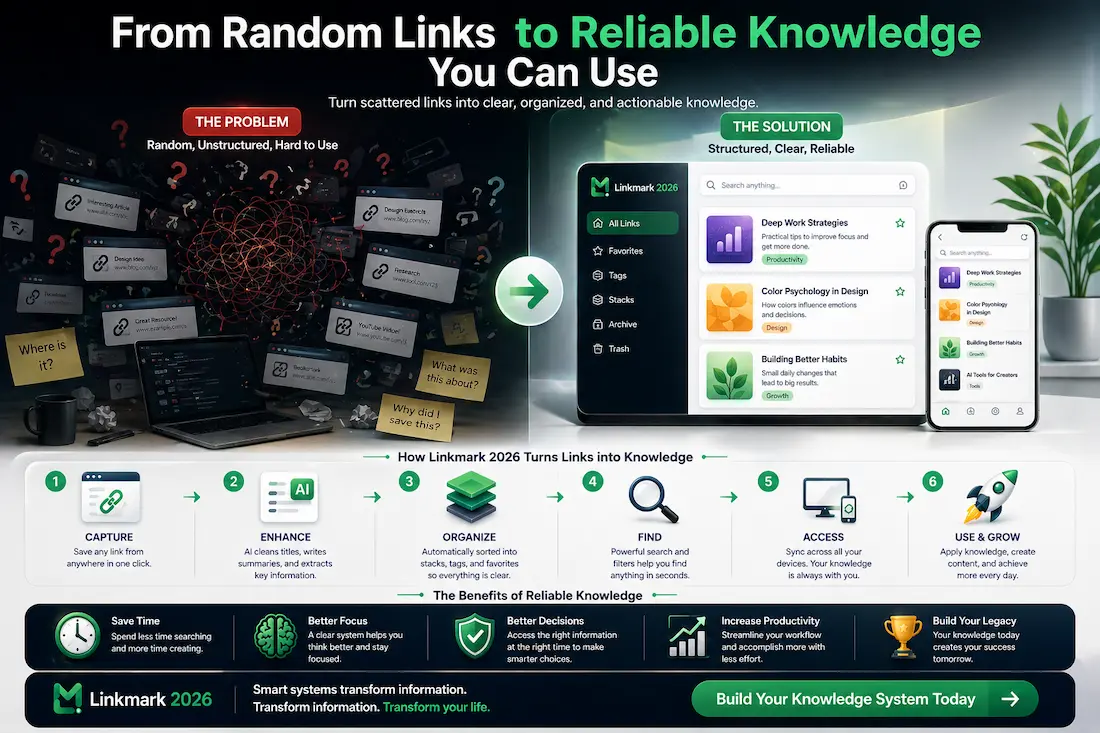
LinkMark 2026 is designed to turn randomness into reliability. Instead of keeping links as raw URLs, it transforms them into structured knowledge units.
Each saved link is automatically enhanced. Titles become clear. Descriptions become concise. Content is summarized so you can understand it in seconds.
Clarity Turns Links into Tools
When a link is clear, it becomes usable. You don’t need to open it to remember what it’s about. You don’t need to guess why it matters.
This clarity changes how you interact with your content. You move faster, make decisions quicker, and use information more effectively.
Structure Creates Trust
A reliable system is one you trust. You know that what you saved will be easy to find and understand later.
LinkMark builds this trust by maintaining consistency. Every link follows the same clean structure, making your entire library predictable and easy to navigate.
Read more: How to Use LinkMark to Organize Your Links Without Effort
From Scattered Pieces to Connected Ideas
When your links are structured, they stop being isolated items. They start forming connections. You can group related content, revisit ideas, and build on what you’ve already collected.
This is where knowledge starts to grow instead of just accumulate.
Speed Enables Action
Reliable knowledge is not just organized—it’s fast. If it takes too long to find something, you won’t use it.
With instant search and seamless access, LinkMark ensures your information is always within reach. This makes it easier to move from idea to action without delay.
Consistency Over Time
The value of a system is measured over time. A good system doesn’t just work today—it continues to work as your content grows.
LinkMark supports this by keeping your information clear and structured from the moment it’s saved. This consistency prevents your system from breaking as it scales.
From Collection to Creation
When your knowledge is reliable, it becomes a foundation for creation. You can use your saved content to write, build, and develop ideas.
Instead of starting from scratch, you start from a system that already supports you.
Conclusion: Make Your Links Work for You
Saving links is easy. Turning them into something useful is the real challenge. Without structure, they remain random. With the right system, they become reliable knowledge.
LinkMark 2026 makes this transformation possible. It turns scattered content into clear, organized, and usable information.
Because in the end, it’s not about how many links you save—it’s about how many you can actually use.