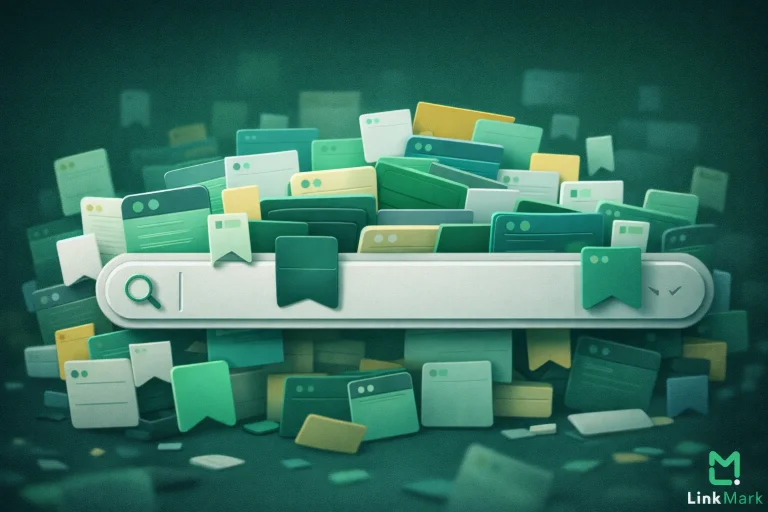


There’s a quiet kind of clutter most people don’t notice.
It doesn’t sit on your desk. It doesn’t fill a drawer. It doesn’t make noise.
Instead, it hides in browser bookmarks, open tabs, saved chats, email drafts, and half-finished notes.
It lives across tools, apps, and devices.
These are your scattered links. At first, they don’t feel like a problem. In fact, they feel responsible.
You save something because it looks useful. You keep a tab open because you might return to it.
You send yourself a link because you don’t want to lose it. Everything feels under control—until one day, it doesn’t.
The Moment It Starts to Feel Heavy
The problem rarely appears all at once. It shows up in small moments.
You’re working on something important, and you remember an article you saved a few weeks ago.
You’re sure it was helpful. You’re sure you kept it somewhere. But where?
You check your bookmarks. Then your notes. Then your email. Maybe you left it in a tab.
Maybe you saved it in a messaging app. Five minutes pass. Then ten.
Eventually, you give up and search again online.
The information wasn’t lost. It was scattered. And that scattering cost you time, focus, and momentum.
The Hidden Mental Tax
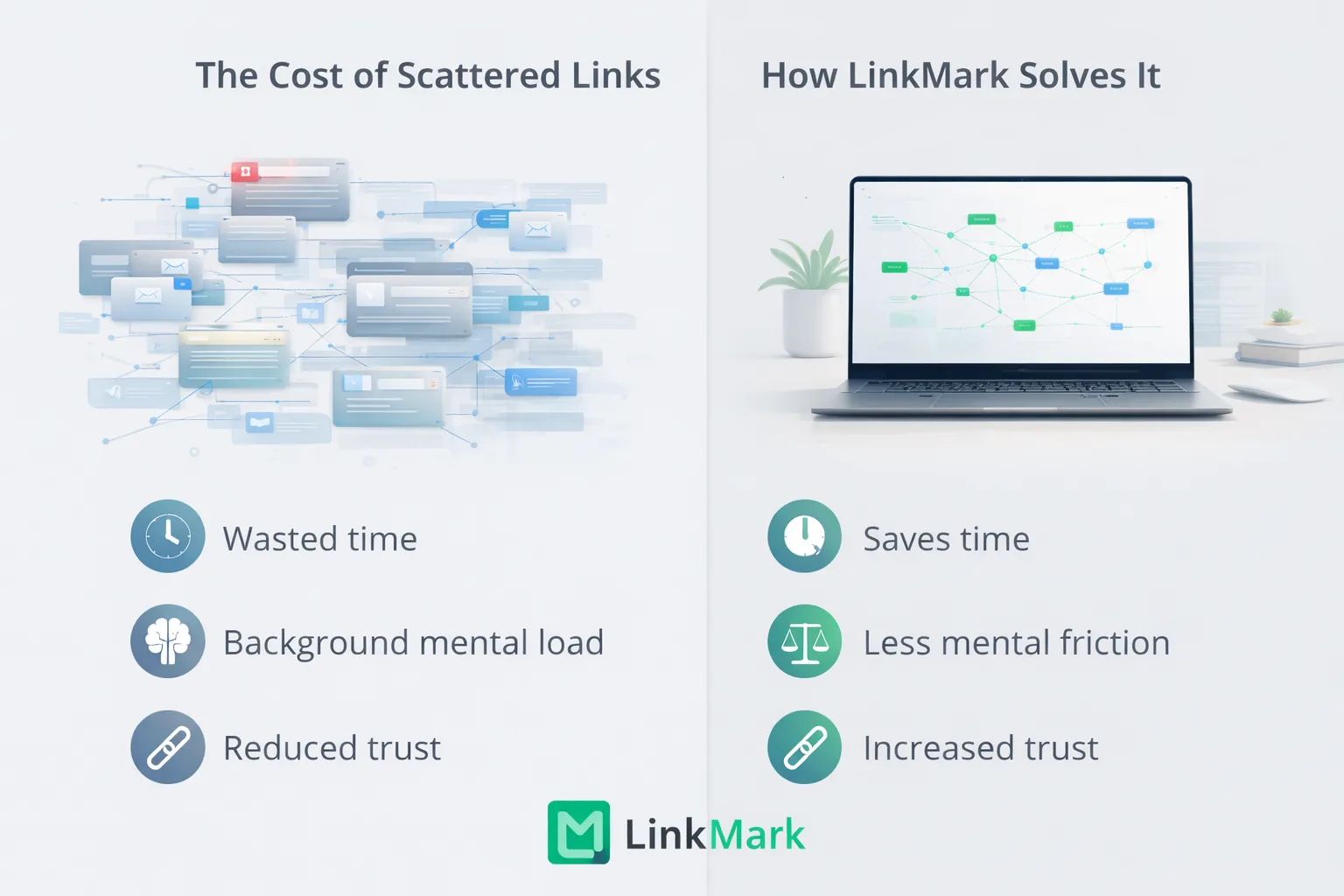
Scattered links don’t just slow you down. They quietly tax your attention.
Every time you try to retrieve something, your brain runs a background process:
Where did I save this? Was it in bookmarks or notes? Did I rename it? Did I already read it?
These micro-decisions interrupt your thinking. They force your mind to shift from “doing” to “locating.”
That shift might seem small, but when it happens repeatedly throughout the day, it drains energy.
It fragments focus. It reduces confidence in your own system.
Over time, you stop trusting your saved resources. And that’s where the real cost appears.
When You Stop Trusting What You Save
Trust is invisible until it disappears. When links are scattered across tools, retrieval becomes uncertain.
You hesitate before checking your own system because you’re not sure it will help.
You assume it might be faster to search again from scratch—so you do.
You re-search topics you’ve already explored. You re-read information you’ve already saved.
You duplicate effort without realizing it. Your saved links become a backup plan instead of a reliable resource.
This is the hidden cost of fragmentation: not just wasted minutes, but eroded trust.
Why More Organization Doesn’t Solve It
The natural reaction to scattered links is to organize more. More folders. More categories. More tags.
At first, this feels productive. You’re creating structure. You’re cleaning up. You’re fixing the mess.
But if links are still living across multiple tools, the fragmentation remains.
Even within one tool, heavy categorization can create a different kind of friction.
You spend time deciding where something belongs instead of thinking about why it matters.
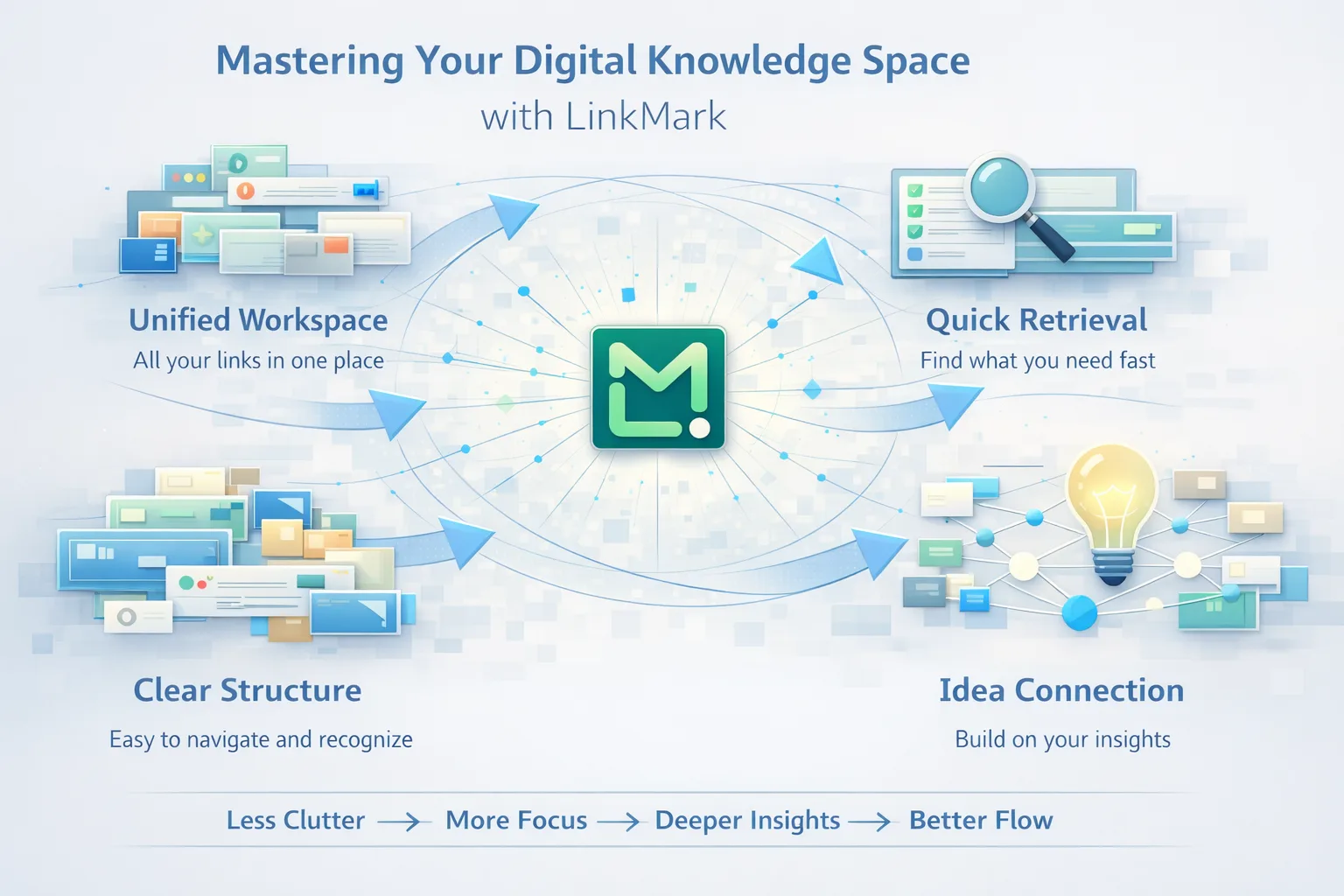
Organization alone is not enough. What’s needed is concentration—a single, coherent space where your links live
and remain recognizable over time.
The Difference Between Storage and Structure
There’s an important distinction here. Storage is about location. Structure is about clarity.
You can store links in ten different apps and technically never lose them, but that doesn’t mean they’re usable.
Structure reduces cognitive effort. It makes returning to information predictable.
It makes recognition easier than recall. When you open a structured space, you don’t feel like you’re searching
through fragments. You feel like you’re stepping back into a system that understands how you think.
This is where design matters more than discipline.
Read more: Why You Need Thinking, Not Just Saving Tools
How LinkMark Addresses the Real Problem
LinkMark doesn’t try to solve scattered links by asking you to save less. It solves the fragmentation itself.
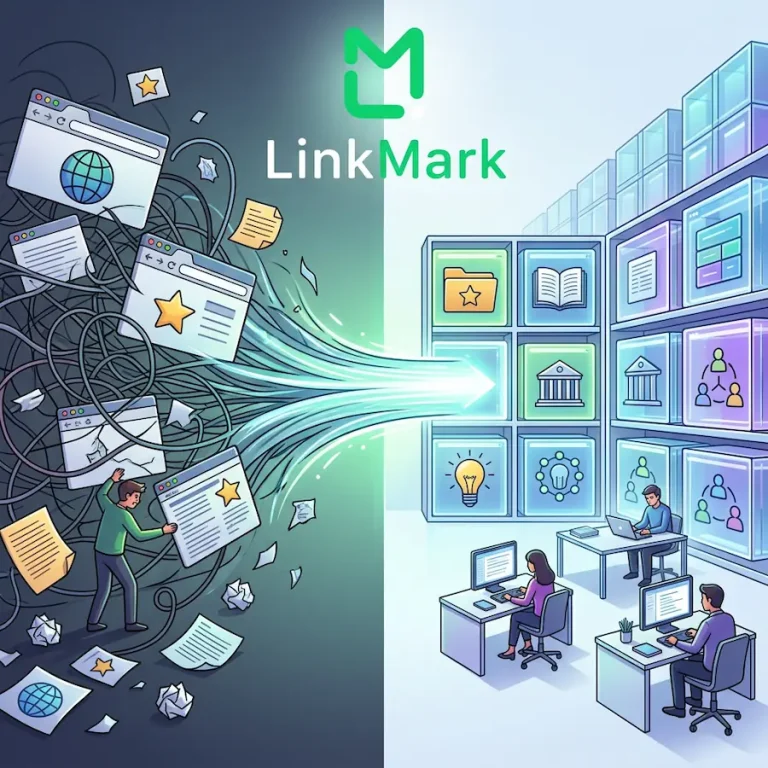
Instead of spreading links across different digital corners, LinkMark brings them into one cohesive environment.
A place where links are not isolated entries, but part of a continuous thinking space.
When links live in a unified system, you stop guessing where something is.
You stop switching between tools. You stop doubting whether you saved something properly.
Retrieval becomes smoother. Recognition becomes faster. Trust returns.
And when trust returns, behavior changes naturally.
From Fragmentation to Flow
The biggest shift happens in your workflow. Without scattered links, your attention stays where it belongs—on the task at hand.
You don’t break your momentum to hunt for resources. You don’t open multiple apps hoping one of them contains what you need.
You don’t keep unnecessary tabs open “just in case.”
Instead, you move forward with confidence. This is what flow feels like: not speed, but stability.
Not chaos, but clarity. LinkMark supports this by centralizing your saved links and giving them structure
that supports recognition over time.
The Long-Term Effect on Thinking
When links are no longer scattered, something deeper changes: your thinking becomes less fragmented.
Ideas connect more easily because they exist within the same space.
Patterns become visible. Recurring themes stand out.
You begin to build on what you’ve already explored instead of starting over each time.
This turns saved links from isolated references into parts of an evolving knowledge system.
Over weeks and months, that system compounds. It grows clearer instead of heavier.
And the mental weight that once came from scattered tools begins to disappear.
A System That Supports the Mind
The hidden cost of scattered links isn’t about technology. It’s about mental friction.
Every fragmented save, every uncertain search, every duplicated effort adds up.
By centralizing links and preserving structure, LinkMark removes that friction.
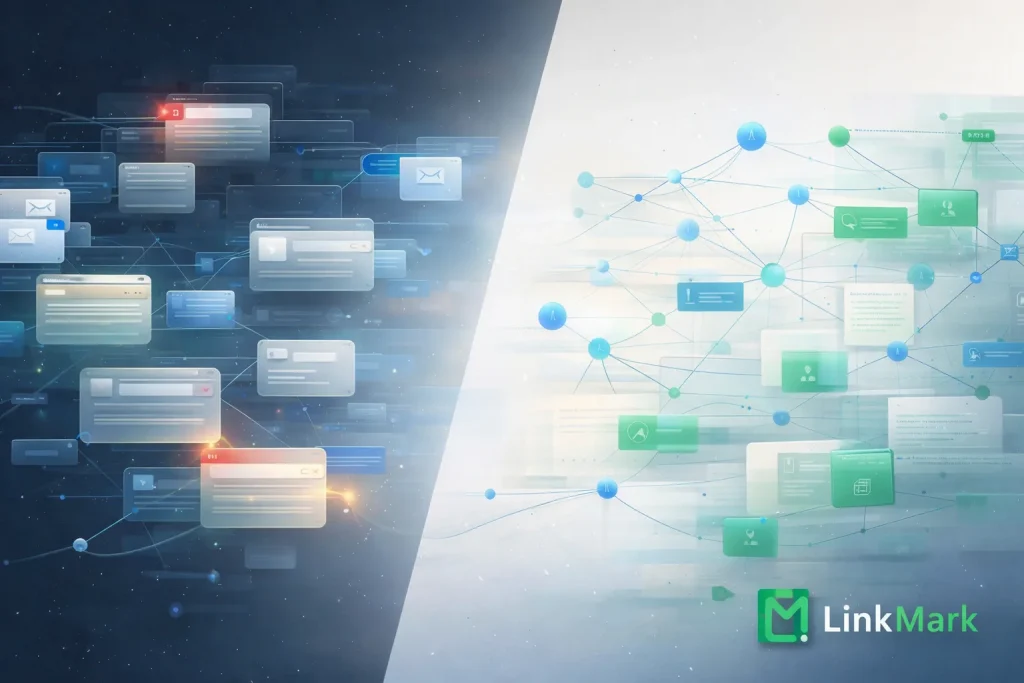
It replaces fragmentation with continuity.
You no longer manage pieces. You interact with a coherent whole.
And when your tools stop dividing your attention, your thinking becomes stronger.
Conclusion
Scattered links rarely look urgent. They don’t create obvious errors or dramatic failures.
But their hidden cost appears in lost focus, reduced trust, and interrupted flow.
The solution isn’t saving less. It’s designing better.
By bringing links into a unified, structured space, LinkMark eliminates the quiet mental tax of fragmentation.
When your saved information lives in one coherent system, clarity replaces clutter.
Momentum replaces hesitation. And the links you save finally start working for you instead of against you.