
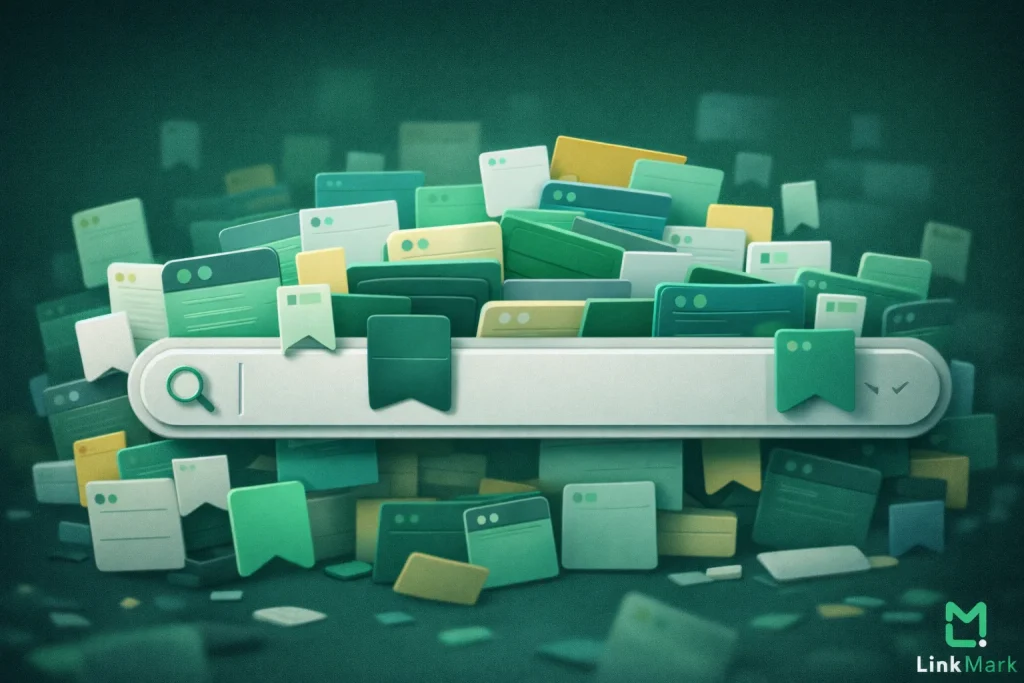

Saving links is easy. Returning to them is where things get complicated.
Most of us don’t notice this at first because the “save” action feels like progress. However, the first time you urgently
need a link you saved weeks ago—and can’t find it—you realize something important: the real problem isn’t saving.
It’s coming back.
This article focuses on that overlooked half of the experience. We’ll unpack why returning to saved links feels harder than it should,
why traditional tools often fail at the exact moment you need them, and how LinkMark changes the return experience by making links
recognizable, not just stored.
The Problem Starts After You Click “Save”
At the moment you save a link, everything makes sense. You remember what you were looking for, why the page mattered, and how it fits
into your work or learning. Yet that clarity is temporary. As time passes, the link stays the same, but your context changes.
That’s why returning becomes difficult: you’re not just looking for a URL, you’re trying to recover an earlier mindset. And because most
tools store links without preserving meaning, the return moment turns into a guessing game.
A Realistic “Return” Moment
Picture a common scenario. You’re in the middle of a task and you remember “that perfect resource” you saved earlier. You open your bookmarks.
Then you open your notes app. Then your saved chat messages. The link is somewhere, but the path to it is unclear.
So you scroll. You open a few links that look close. You skim. You close them. Then you try again. And eventually—almost automatically—you do
what feels faster: you re-search on Google.
This is the point where saving links stops paying off. Not because you did anything wrong, but because the system wasn’t built to support
the return journey.
The Pain Is Not “Lost Links” — It’s Lost Momentum
What makes this frustrating isn’t only the missing link. It’s the disruption. You switch from “doing the work” to “recovering information.”
That shift costs focus, time, and energy.
And because this happens in small bursts, it’s easy to underestimate. Still, over days and weeks it adds up:
- You reopen the same sources repeatedly.
- You keep too many tabs open “just in case.”
- You stop trusting your own saved library.
- You waste time rebuilding context you already had.
Naturally, you begin to save less—or you keep saving, but you stop returning. Either way, the collection turns into clutter.
Why Returning Feels Harder Than Searching
Here’s the surprising truth: re-searching often feels easier than returning. Searching gives immediate feedback. It doesn’t require you to
remember how you categorized something in the past. It also doesn’t force you to confront messy folders, unclear titles, or a giant list
of “saved for later” items.
Returning, on the other hand, depends on your past decisions. If the link was saved without context, you’re left with fragments—titles that
don’t trigger meaning and folders that no longer match how you think today.
So the real issue becomes clear: most tools rely on recall (you must remember), while humans are better at recognition
(you can identify it when you see it).
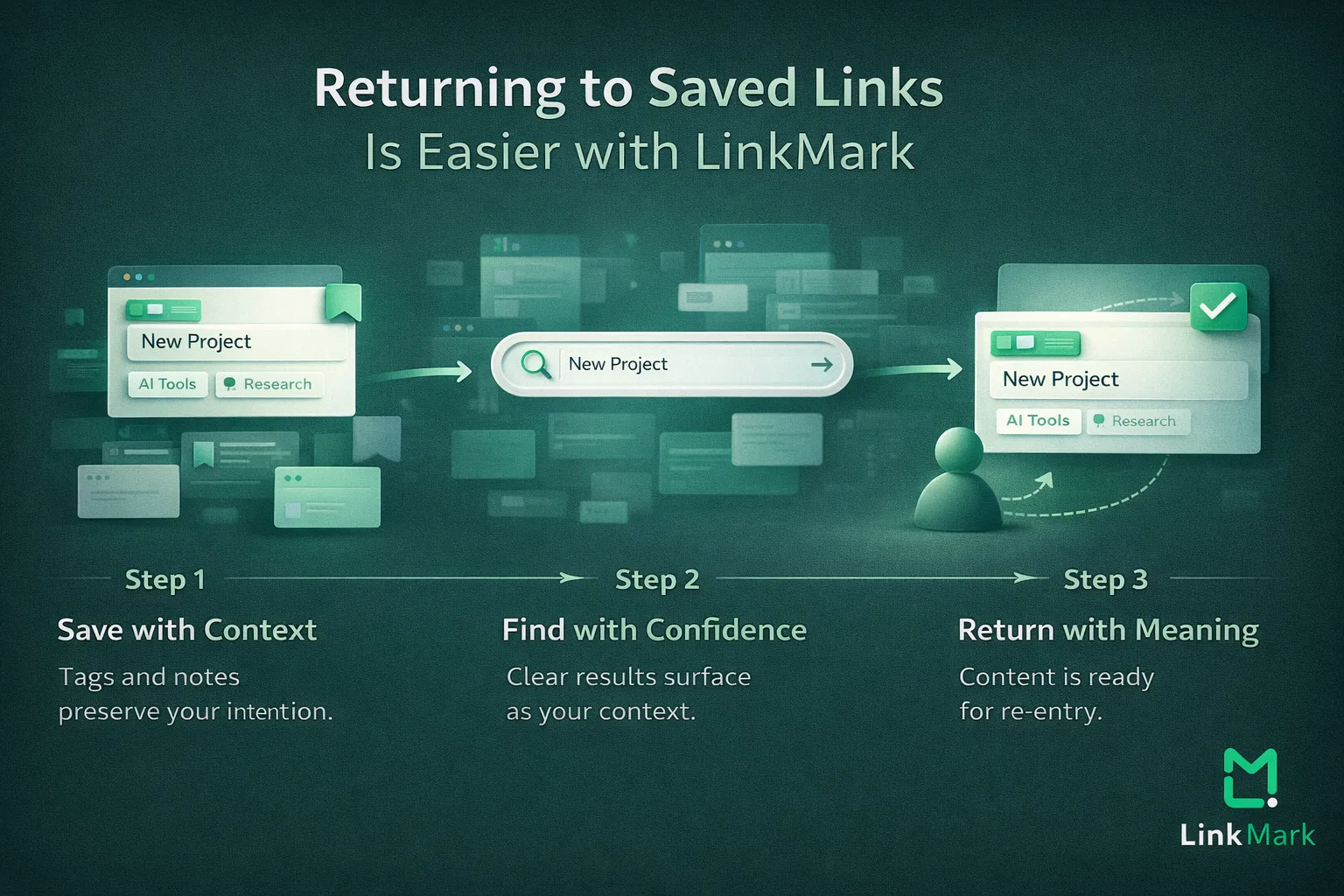
The Core Requirement of Return: Recognition
If a system wants to help you return to information, it needs to answer one question reliably:
“Will I recognize this when I see it?”
Recognition is not about perfect memory. It’s about cues: clear titles, meaningful grouping, and signals that restore context quickly.
Without those cues, even a valuable link becomes invisible inside your own archive.
This is also why “better discipline” doesn’t solve the problem. The failure is structural. The system was built to store links, not to help
you re-enter them later.
Read more: When Information Loses Its Context
Why Traditional Tools Miss the Return Experience
Bookmarks and folders are helpful at first, but they don’t scale well. You either end up with a few broad folders that become junk drawers,
or dozens of specific folders that create decision fatigue. Either way, the same thing happens: retrieval becomes slower as the library grows.
Even search has limits. It works only if you remember the right keywords. Yet the most common return situation is exactly the opposite:
you remember the idea, not the phrasing.
So the return problem keeps repeating—not because you save “wrong,” but because the tools were designed around storage, not meaning.
How LinkMark Changes the Way We Return to Links
This is where LinkMark fits naturally into the story. Instead of treating saving as the final step, LinkMark treats saving as preparation for
return. In other words, it prioritizes the future moment when you’ll need that link again.
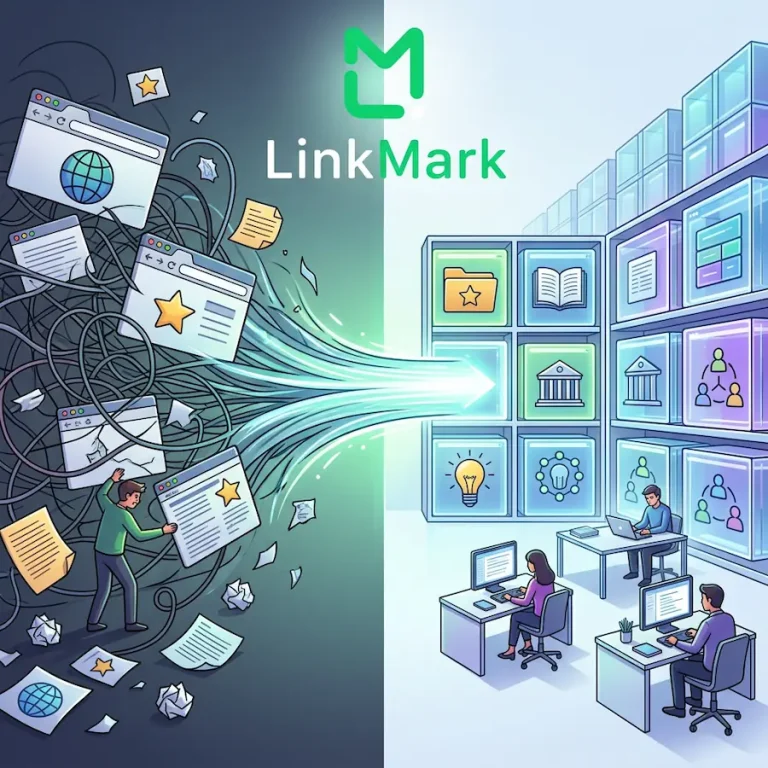
LinkMark helps make saved links more recognizable later by supporting structure and clarity. Rather than leaving you with a bare URL
and a vague title, the system is oriented around helping you quickly identify what a link is, why it matters, and where it belongs.
As a result, returning becomes less like hunting and more like re-entering. You’re not relying on perfect memory—you’re relying on a system
that makes meaning easier to recover.
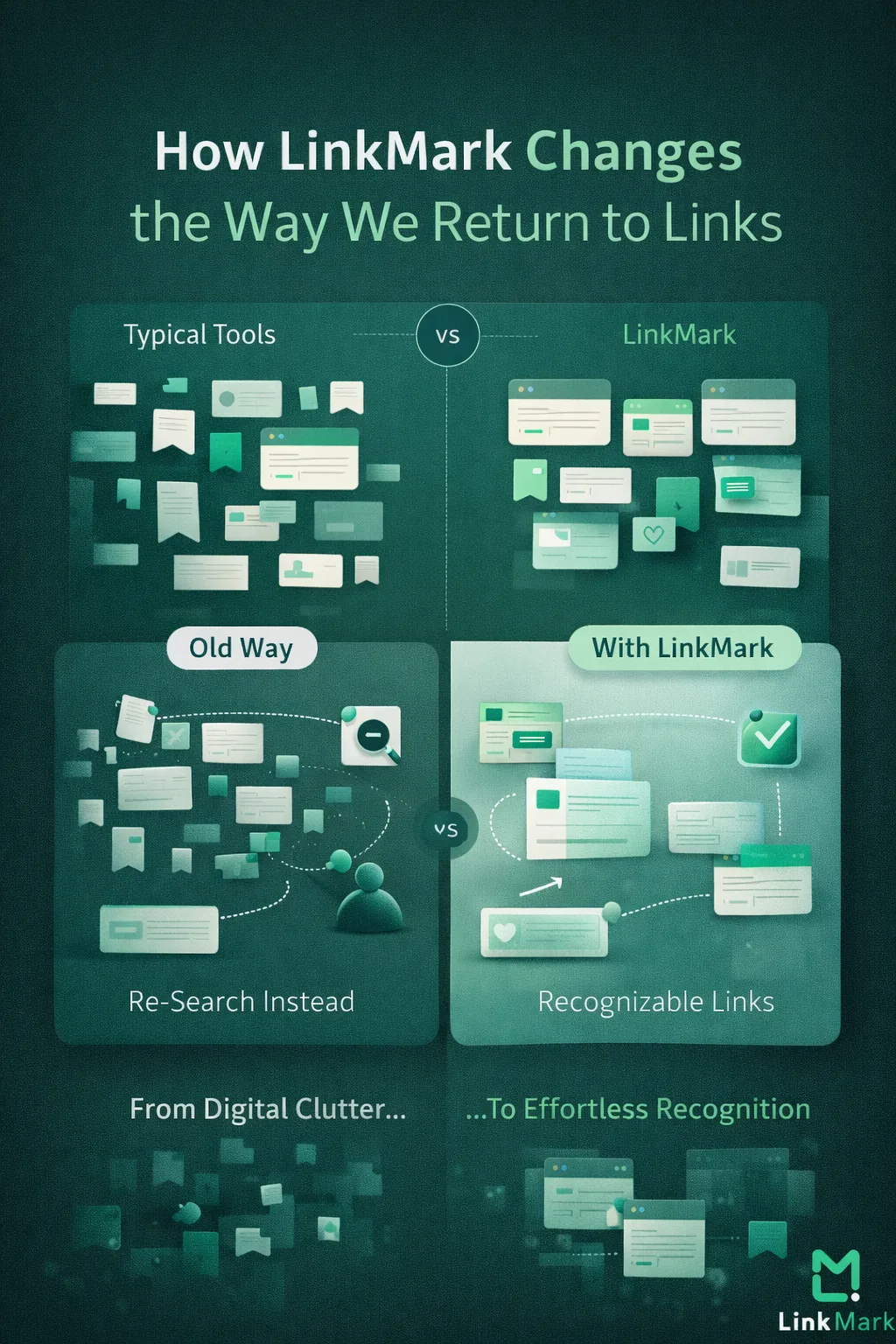
From Guesswork to Confidence
When returning is reliable, your behavior changes without force. You stop opening five “almost right” links. You stop keeping duplicate tabs.
>You stop storing backups in random places. Most importantly, you begin to trust your saved library again.
That trust is the real upgrade. It reduces cognitive load because you no longer feel you must hold everything in your head. The system carries
the structure, and your attention stays on the work.
The Bigger Shift: Saving Becomes Meaningful Again
Once the return experience improves, saving stops being a shallow habit and becomes a useful practice. Instead of saving out of fear (“I might
lose this”), you save with intention (“I can come back to this when I need it”).
And that’s the key transformation: the value of a saved link is not that it exists somewhere. The value is that it’s a reliable point of re-entry
into understanding.
Conclusion
Saving links has never been the hard part. Returning to them has.
And when returning fails, saving quietly turns into digital clutter.
The solution isn’t more discipline or more folders. It’s a system built around recognition—one that respects how memory fades and context changes.
That’s where LinkMark changes the experience: not by shouting features, but by redesigning the moment that matters most.
When returning becomes easy, saving becomes meaningful again—and your link library finally starts working like it was always supposed to.