

At some point during the day, it happens almost automatically. You come across a valuable article, a useful tool, a research paper, or a reference you know you will need later. Without much thought, you save the link. A bookmark, a note, a message to yourself. The action feels responsible, even productive.
In that moment, there is a quiet assumption that the problem has been solved. The information is safe. You can move on.
But days or weeks later, when you actually need that link, the certainty disappears. You remember saving it, but not where. Was it in the browser? A folder? A chat thread? A document? The link exists somewhere, yet it might as well be lost.
The Hidden Cost of Losing Saved Links
This situation is so common that many people no longer question it. Losing saved links has become part of daily digital life. The real cost, however, is not just wasted minutes searching. It is broken focus, repeated work, and missed opportunities.
Instead of building on past knowledge, we start over. We re-search the same topics, re-read similar articles, and re-discover ideas we once found valuable. Over time, this creates a sense that saving information does not really help.
Digital Clutter Grows Quietly
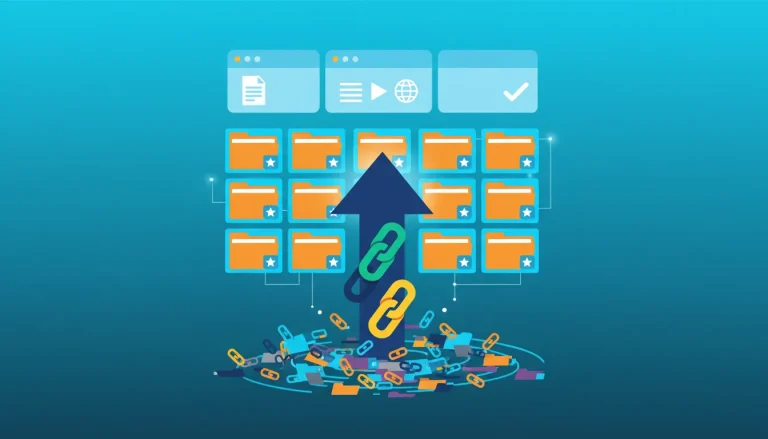
The problem rarely appears all at once. It builds gradually. A few bookmarks turn into dozens. Dozens become hundreds. Each saved with good intentions, yet rarely revisited.
What begins as organization slowly turns into clutter. Lists grow longer, folders multiply, and the effort required to find anything meaningful increases. Eventually, the system becomes something we avoid rather than rely on.
Why Traditional Saving Methods Fail Over Time
Most traditional tools are designed around storage, not usage. Browsers store bookmarks as static items. Notes apps collect links as lines of text. Messaging apps bury links inside endless conversations.
These tools assume that future-you will remember what past-you was thinking. In reality, context fades quickly. A link saved without explanation loses its meaning, even if it is technically still there.
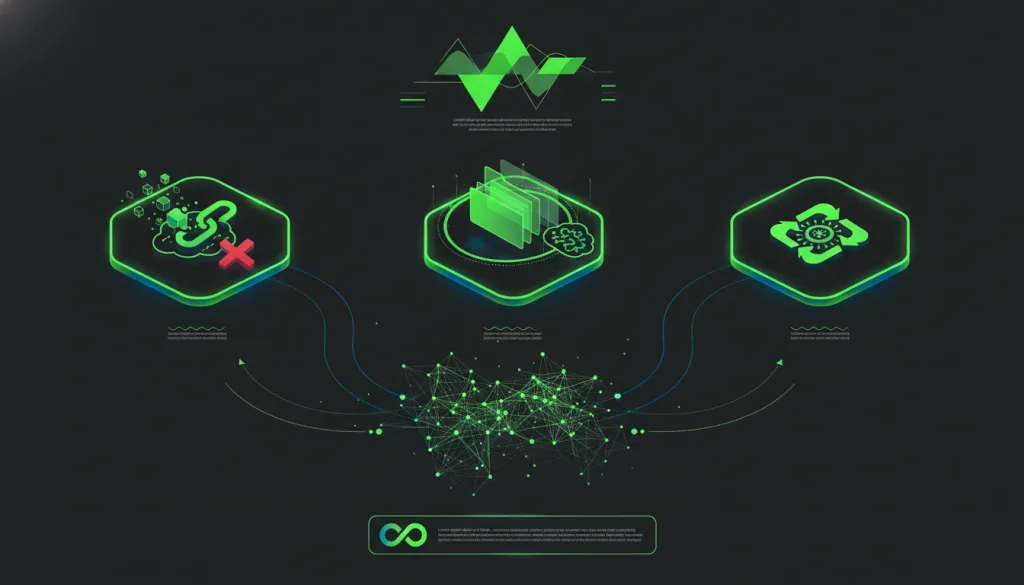
Folders and Tags Are Not Enough
At first, folders feel like a solution. Work, learning, inspiration, personal. But life rarely stays that simple. Projects evolve, interests overlap, and ideas change direction.
A link saved for one purpose may become useful in a completely different context later. Rigid structures struggle to adapt, leaving links trapped in places you no longer think to check.
Fragmentation Makes Things Worse
Links are saved everywhere. Some in the browser, others in notes, emails, chats, documents, or cloud tools. Each platform becomes a separate memory.
The more fragmented your system becomes, the harder it is to trust it. When retrieving saved information feels harder than searching again, saving loses its value entirely.
Read more: https://linkmark.com/
The Real Problem Is Not Forgetting Links
At its core, this is not a memory issue. It is a thinking issue. Saving a link is a passive act. Understanding, connecting, and reusing information is active.
When tools only support storage, they fail to support thinking. That is why links disappear from workflows even when they are technically saved.
A Shift in How We Should Treat Links
Links are not just references. They are ideas, answers, inspirations, and building blocks. Treating them as simple files ignores their role in learning and decision-making.
What is needed is not another place to store links, but a system that keeps them meaningful over time.
Where the Solution Begins to Appear
This is where the approach changes. Instead of asking, “Where did I save this link?” the better question becomes, “Why did I save it, and how does it connect to what I am working on now?”
Answering that question requires a different kind of tool. One designed around context, relationships, and reuse, not just storage.
LinkMark: Turning Saved Links Into Usable Knowledge
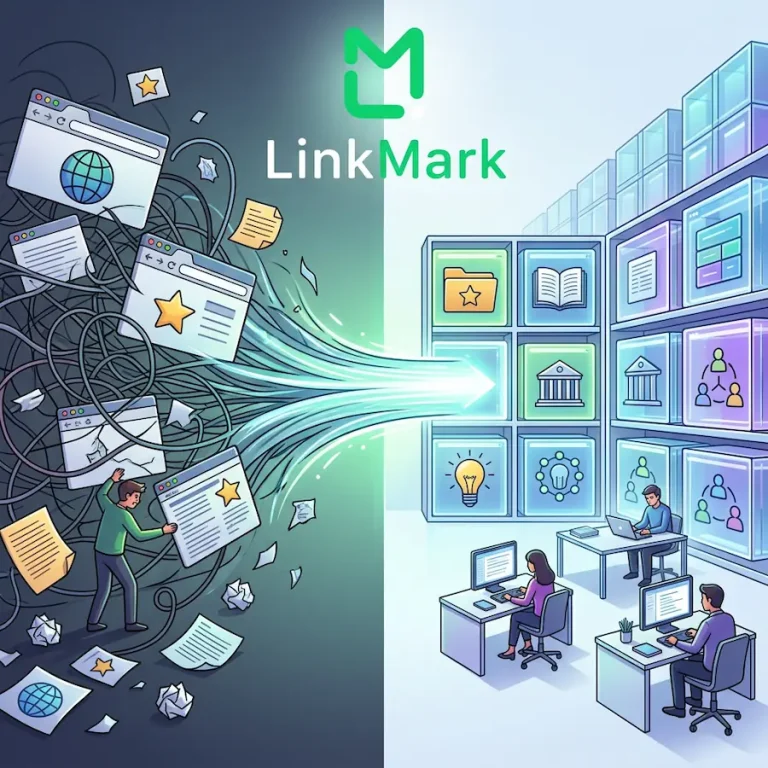
LinkMark enters the picture not as another bookmarking tool, but as a response to this exact problem. It treats every saved link as a piece of knowledge rather than a forgotten reference.
By allowing links to be organized around ideas, projects, and personal thinking, LinkMark keeps context attached to the source. Notes, connections, and structure grow naturally instead of being forced upfront.
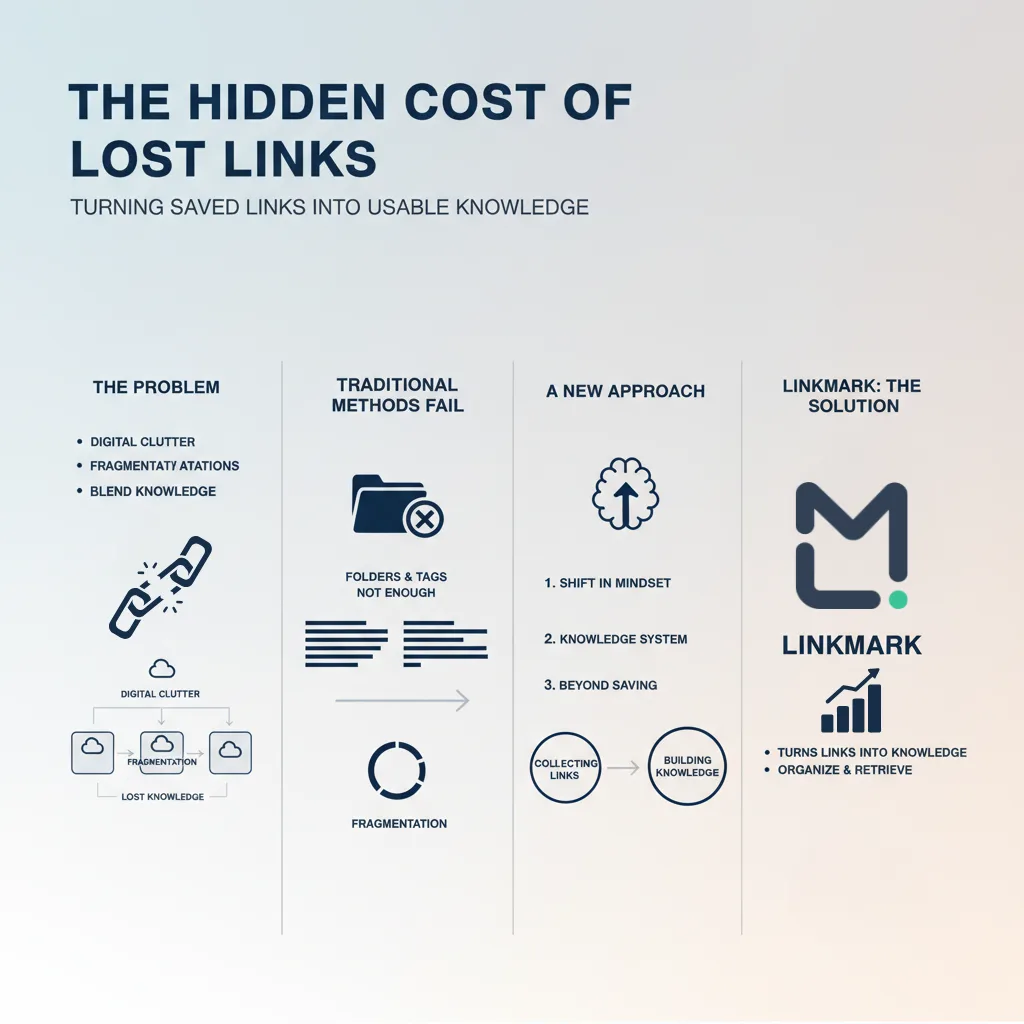
From Collecting Links to Building a Knowledge System
With LinkMark, saving is no longer the end of the process. It is the beginning. Links remain visible, connected, and useful as your work evolves.
Over time, this changes behavior. You stop saving everything out of fear of forgetting and start saving intentionally, knowing that what you save will actually be there when you need it.
Conclusion
We lose important links not because we are careless, but because we rely on tools that were never designed to support long-term thinking. Storage alone is not enough.
By addressing the problem at its root, LinkMark offers a more human way to manage information. One where links stay connected to meaning, context, and purpose, long after the moment they were saved.