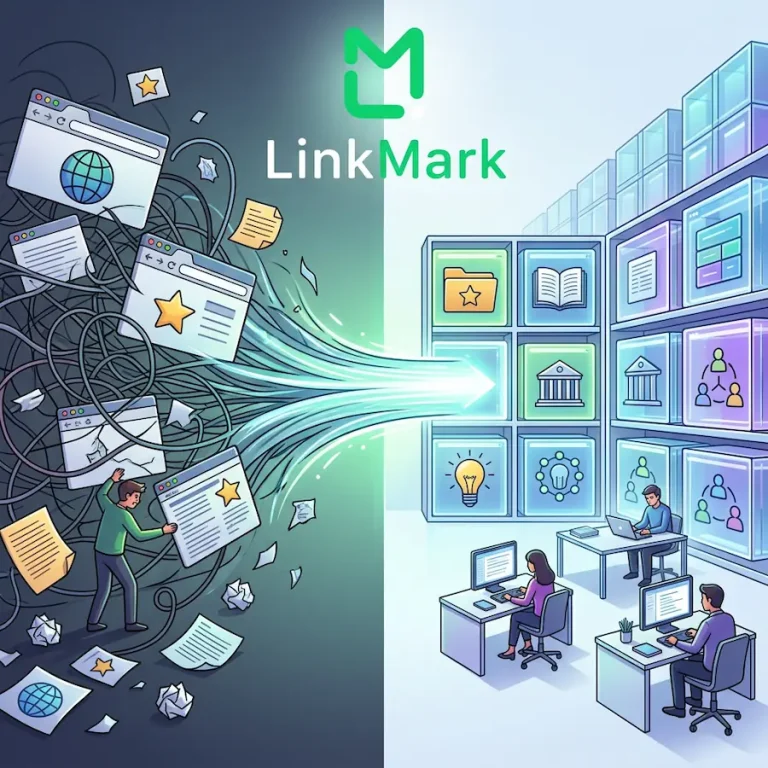



Every day we collect links without thinking twice. An article we plan to read later. A tutorial we might need. A tool someone recommended. A research paper that feels important. We save them quickly, promising ourselves we will return soon. But days pass, more links pile up, and the original ones fade into the background. They are not deleted. They are simply buried.
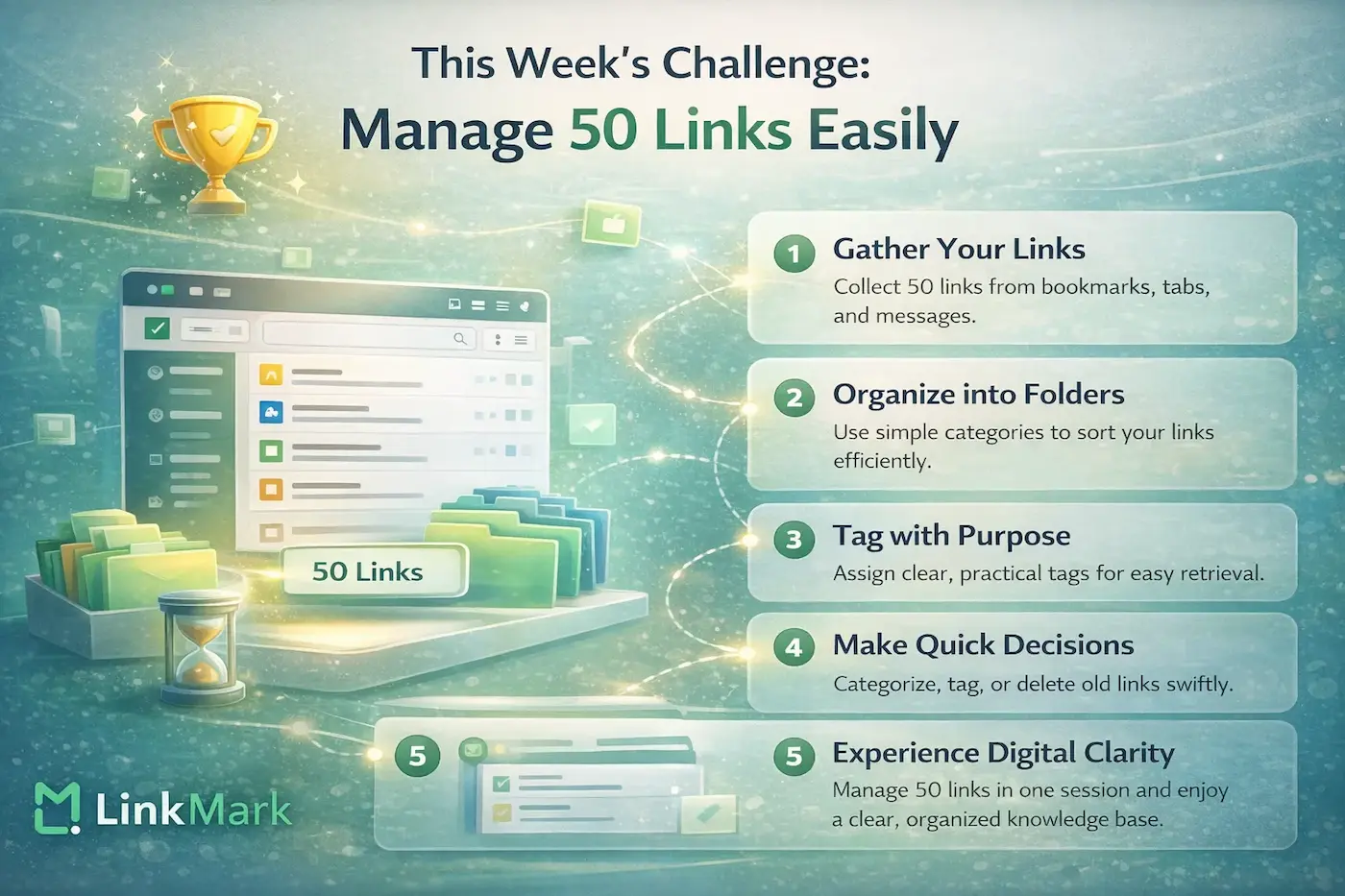
This week, instead of letting the pile grow, we introduce a practical challenge: organize 50 links in one focused session. Not gradually over months. Not casually when you feel like it. Intentionally. In one sitting. The objective is not just cleanup. It is clarity. It is about proving that digital order is achievable and sustainable.
Fifty links may sound intimidating, but the number is deliberate. It is large enough to create visible transformation, yet manageable enough to complete in under an hour with the right system. The challenge forces you to confront your digital clutter and reshape it into something structured and useful.
Why 50 Links?
Organizing five links does not change behavior. Organizing fifty shifts perspective. When you process a significant batch, patterns emerge. You begin to see recurring themes in what you save. You notice interests, priorities, and even distractions. The number is not random. It is big enough to reveal your digital habits.
More importantly, completing fifty builds confidence. Once you experience how structured organization feels, maintaining it becomes easier. The challenge is less about the links themselves and more about rewiring your approach to information.
Step 1: Collect Without Judging
Start by gathering links from everywhere. Browser bookmarks, open tabs, saved messages, notes, emails. Bring them into one list. Do not categorize yet. Do not delete immediately. Simply centralize. Fragmentation is one of the main reasons links get lost, so this first step alone already creates progress.
Seeing all your links together can be eye-opening. You may realize how many similar resources you saved. You may notice topics that dominate your digital consumption. This awareness lays the foundation for smarter organization.
Step 2: Build Simple Structure
Avoid the temptation to create an overly detailed folder system. Complexity slows action. Start with broad, intuitive categories based on usage rather than theory. Think about how you will retrieve the link in the future, not how academically precise the category sounds.
For example, categories like “Work,” “Learning,” “Tools,” “Inspiration,” or “Personal” are enough to begin. Structure should reduce friction, not increase it. The goal is speed and clarity.
Step 3: Use Tags for Flexibility
Folders create stability. Tags create flexibility. When organizing your fifty links in Linkmark, assign one or two meaningful tags to each. Keep them intentional. If a link is about productivity design, a tag like “UX” or “Focus” may be sufficient.
Tags allow cross-connections. A resource saved under “Learning” can also appear when you search by topic. This multidimensional structure ensures links remain discoverable without duplicating them across folders.
Step 4: Make Fast Decisions
Speed is essential for this challenge. If you hesitate too long on each link, momentum disappears. Decide quickly: keep, categorize, tag, or delete. If you cannot remember why you saved a link and it no longer feels relevant, remove it. Organization includes elimination.
Curating your links reduces digital weight. It transforms your collection from a storage archive into a refined library.
Read more: LinkMark: The Smart Library for Your Digital Links
Step 5: Notice the Transformation
By the time you finish link number forty or fifty, something shifts. The system begins to feel coherent. Retrieval becomes obvious. Instead of scrolling endlessly, you navigate confidently. The difference is subtle but powerful. You no longer feel overwhelmed by saved information. You feel supported by it.
This transformation is what makes the challenge meaningful. It demonstrates that clarity is not a distant goal. It is a direct result of deliberate structure.
From Challenge to Habit
Once you complete the fifty-link session, maintenance becomes simple. New links can be added weekly in small batches. Because the structure already exists, processing ten or fifteen links takes minutes rather than hours.
Sustainable productivity depends on small consistent actions. The challenge jumpstarts the process, but the habit maintains it. Linkmark supports this habit by making organization intuitive instead of overwhelming.
The Bigger Picture
Managing links is not just about bookmarks. It is about managing knowledge. Every saved resource represents time invested in discovery. When those resources are lost, that investment weakens. When they are structured, they compound.
Your digital environment should function like an extension of your memory. It should help you retrieve insights quickly, connect ideas effortlessly, and move forward with confidence. Structure turns scattered links into a strategic asset.
Conclusion
This week’s challenge is simple but transformative. Gather fifty links. Organize them intentionally. Tag with purpose. Remove what no longer serves you. Experience the difference between accumulation and curation.
Digital clarity is not about having fewer links. It is about having a system that makes every saved link accessible and meaningful. Complete the challenge once, and you may never return to digital chaos again.