

Every time you come across an important article, a useful tool, a tutorial video, or a website you think you might need later, your natural reaction is to save the link. You click the browser bookmark button, send it to yourself on WhatsApp, or rely on Browser Bookmarks because it feels like the most familiar option. In that moment, everything seems organized and under control, as if the task is complete.
But days or weeks later, when you actually need that link, the real problem begins. Where did you save it? In which browser? Inside which folder? Did you rename it properly, or did you leave the default title? As this scenario repeats, saving links slowly turns from a helpful habit into a silent digital burden you carry every day without realizing it.
A Real Problem We Experience Every Day
Digital clutter is no longer a minor issue. A growing collection of unorganized links affects productivity, wastes time, and increases mental distraction. Instead of helping you, your saved links force you to search endlessly, repeat the same research, or abandon the idea altogether.
The problem is not the number of links you save, but how they are handled. Saving a link alone is not enough. A link without context or structure quickly loses its value. Over time, links pile up, control is lost, and what remains is a long, meaningless list.
Why Traditional Link-Saving Methods Are Not Enough
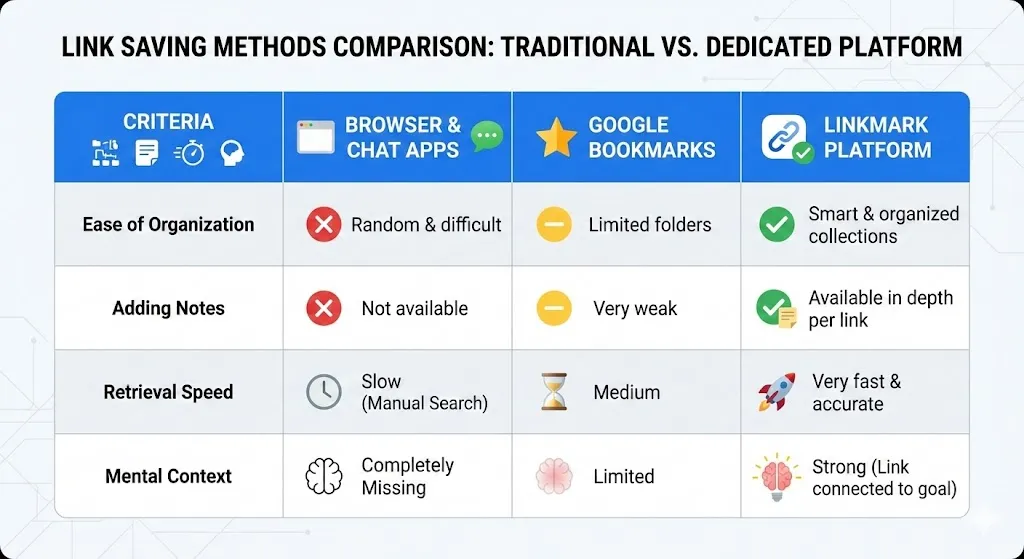
Most users rely on quick solutions that were never designed for real link management. Browser bookmarks may work when you save a handful of links, but they fail completely when the number grows into the dozens or hundreds. Sending links to messaging apps turns them into buried messages lost inside endless conversations.
Even Browser Bookmarks, despite its popularity, does not offer a complete experience. The interface is limited, categorization options are weak, and there is no real flexibility to organize links or add notes explaining why they were saved. The result is always the same: links are stored, but rarely used.
Digital Transformation Has Changed Everything
Today, links are no longer just temporary pages. They are work tools, learning resources, future ideas, and essential references. Remote workers, students, content creators, marketers, and everyday users all deal with a massive number of links on a daily basis.
This reality demands a different approach—one that goes beyond saving and focuses on understanding, organizing, and easily revisiting content. The question shifts from “Where did I save the link?” to “How can I actually use it?”
From Problem to Solution: Why We Need a Dedicated Tool
Once the problem becomes clear, the logical solution is to use a tool designed specifically for link management, not a secondary feature inside a browser. A tool that understands a link is not just a URL, but information that needs structure and context.
This is where the idea begins to change, and where a smarter solution comes into play.
LinkMark: More Than Just a Bookmarking Tool
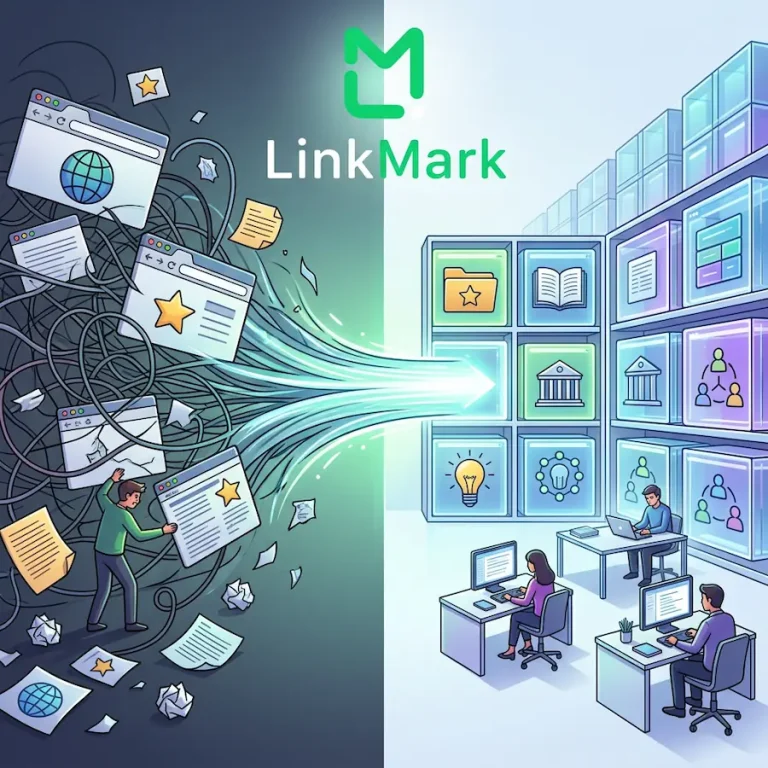
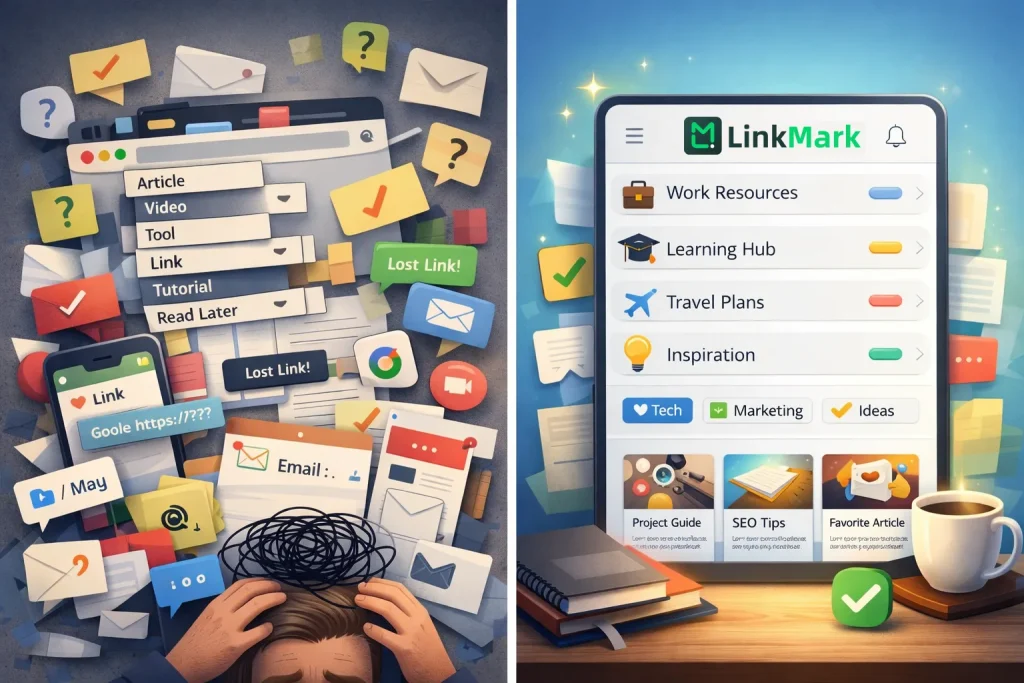
LinkMark does not position itself as a traditional alternative. It is a platform designed to organize your digital life. The core idea is simple: every link has value, and it deserves the right place. LinkMark allows you to save links easily and organize them into clear collections that reflect your interests, projects, or daily needs.
Instead of chaotic lists, you get a structured system you can return to at any time. This organization does more than save time—it reduces stress and gives you a sense of control over your digital content.
Smart Organization Changes the Way You Think
One of LinkMark’s biggest advantages is its focus on the user’s mental experience. When saving a link, you can add a note explaining why you saved it, the idea behind it, or how you plan to use it. This simple step transforms a forgotten link into a useful resource.
Over time, the difference becomes clear. You no longer save links out of fear of forgetting. You save them with intention. Every link has a purpose, a place, and clear context.
Read more: https://linkmark.com/
A Simple Interface with Deep Thinking Behind It
Despite its powerful organization features, LinkMark avoids complexity. The interface is clean and intuitive, designed to be comfortable and easy from the first use. No learning curve, no complicated steps—everything feels natural.
This simplicity makes LinkMark suitable for all users, whether professionals handling large volumes of links or casual users looking for a way out of digital chaos.
A Practical Solution to a Daily Problem
With LinkMark, you no longer need to search for the same article multiple times or lose important links in a sea of bookmarks. Everything you need is organized, accessible, and ready when you need it.
More importantly, the tool gradually changes your digital habits. You think before saving, organize while saving, and benefit after saving. This simple cycle is what makes the solution effective in the long term.
Final Thoughts: The Problem Was Never You
If you constantly feel that your links are getting lost, or that you save too much and use too little, the problem is not you. It is the tools you have been relying on.
Browser Bookmarks and similar solutions may work temporarily, but they are not built for modern digital behavior. The real solution begins when you use a tool that understands the problem at its core.
LinkMark offers that solution quietly, practically, and in a way that fits today’s digital life. It is not just an app—it is a smarter way to deal with links, with more clarity, organization, and peace of mind.