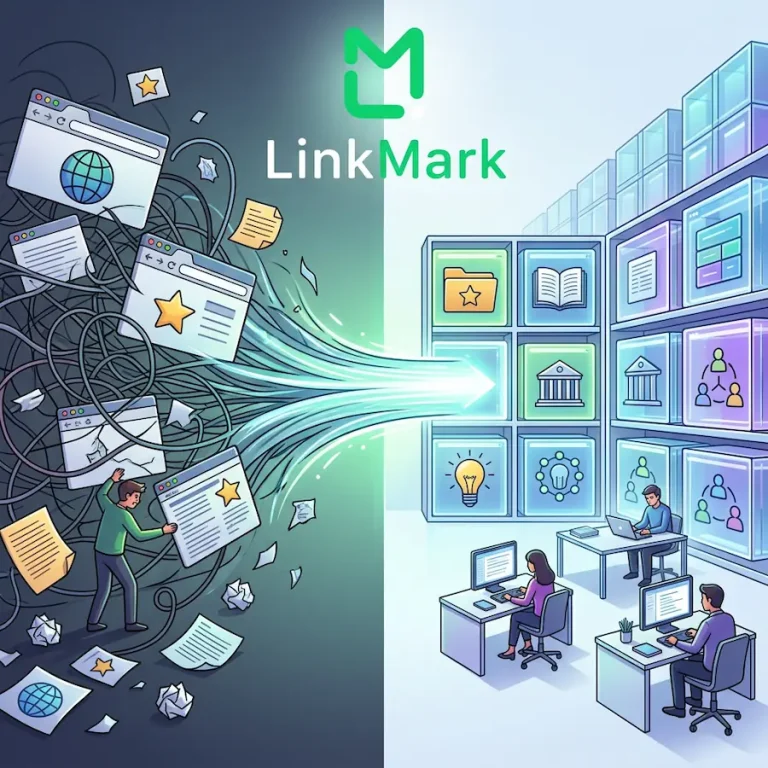

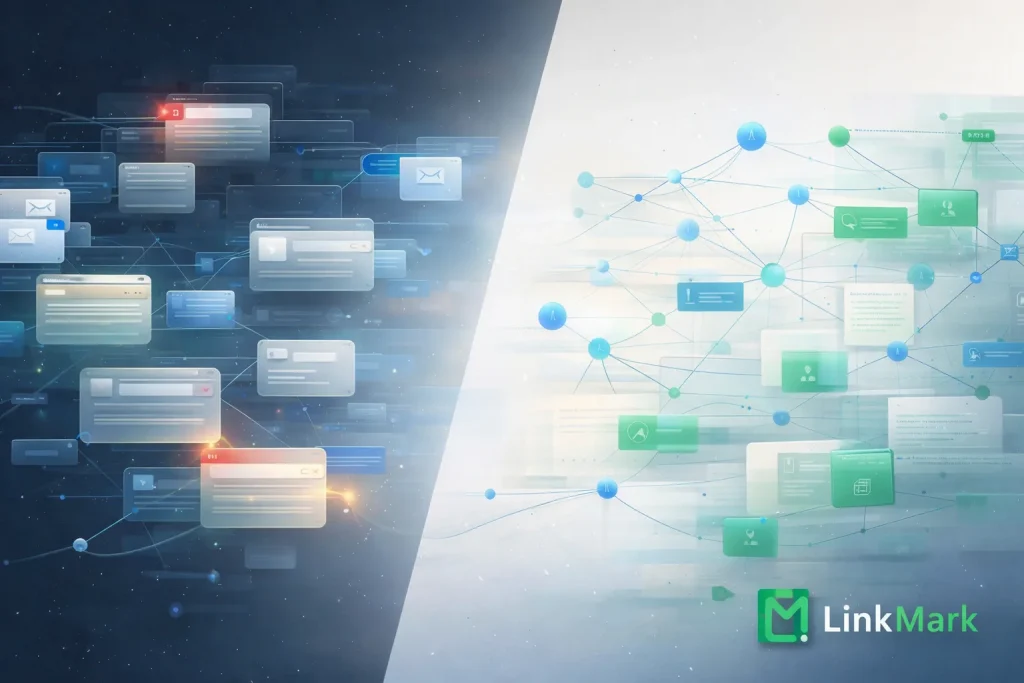

We don’t usually lose links because we forget to save them. We lose them because we don’t build a system strong enough to keep them accessible. Every saved article, tool, tutorial, or resource represents time invested in discovery. When that link disappears into digital clutter, that investment weakens. Over time, scattered links turn into invisible knowledge — saved, but unreachable.
If you want to keep your links forever, the solution is not saving more carefully. It’s structuring more intelligently. Sustainable link management requires a repeatable system, not occasional cleanup sessions. Here are five practical strategies that ensure your links remain accessible, organized, and useful for the long term.
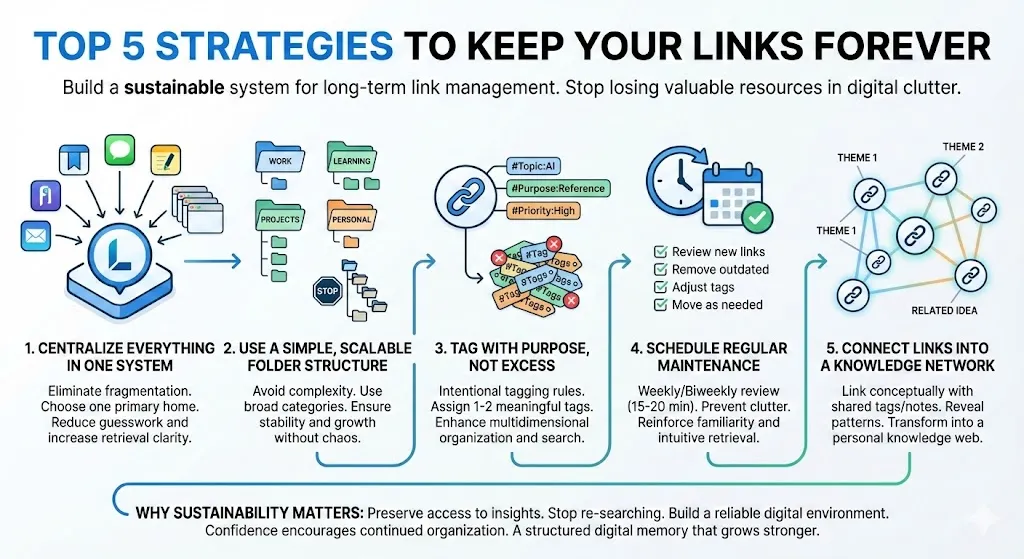
1. Centralize Everything in One System
The biggest mistake people make is fragmentation. Some links are saved in browser bookmarks. Others sit in messaging apps, note-taking tools, emails, or open tabs. When information is spread across multiple platforms, retrieval depends on memory rather than structure.
The first strategy is simple but powerful: choose one primary home for your links. A centralized system eliminates guesswork. You no longer need to remember where something was saved — you know where it lives. This clarity alone drastically reduces the chances of losing valuable resources.
With a structured platform like LinkMark, centralization becomes seamless. Every link enters the same environment, where it can be categorized, tagged, and retrieved consistently.
2. Use a Simple, Scalable Folder Structure
Complexity is the enemy of sustainability. Many users create deeply nested folders in an attempt to organize everything perfectly. Over time, this complexity becomes overwhelming, and links start getting saved randomly just to avoid decision fatigue.
Instead, build a simple structure that can scale. Use broad categories that reflect how you think and work. For example, folders like “Work,” “Learning,” “Projects,” and “Personal” are flexible enough to grow without breaking the system.
The key is stability. Your structure should remain usable whether you have 20 links or 2,000. When the framework is stable, growth doesn’t create chaos.
3. Tag with Purpose, Not Excess
Tags are powerful because they allow multidimensional organization. A single link can belong to a folder while also being tagged by topic, purpose, or priority. However, excessive tagging creates confusion instead of clarity.
Use intentional tagging rules. Assign one or two meaningful tags per link. Think about how you will search for it later. Will you search by topic? By urgency? By type of content? Tag accordingly.
Purpose-driven tagging ensures that links remain discoverable even as your collection expands. It prevents duplication and reduces the need for overly complex folder hierarchies.
Read more: How LinkMark Changes the Way We Return to Links
4. Schedule Regular Maintenance
No system survives without maintenance. Digital clutter builds quietly. Even the most organized structure can weaken if ignored for months.
A short weekly or biweekly review session makes a dramatic difference. Spend 15–20 minutes reviewing new links. Remove outdated ones. Adjust tags if needed. Move links between folders as projects evolve.
This habit prevents small messes from turning into overwhelming chaos. It also reinforces familiarity with your system, making retrieval faster and more intuitive.
Consistency is what turns organization into sustainability.
5. Connect Links into a Knowledge Network
The most powerful strategy goes beyond storage. Instead of treating links as isolated bookmarks, connect them conceptually. When two resources relate to the same topic, use shared tags or notes to link them together.
Over time, this transforms your saved links into a personal knowledge network. Patterns emerge. Themes become visible. You begin to see relationships between ideas that were previously separate.
This networked approach ensures that your links don’t just survive — they evolve. They become part of a growing system that supports learning, creativity, and strategic thinking.
Why Sustainability Matters
Keeping links forever is not about hoarding information. It’s about preserving access to insights you intentionally saved. When your system is sustainable, you stop re-searching content you already found. You stop losing valuable references. You stop feeling overwhelmed by your own archive.
Instead, your digital environment becomes reliable. It supports your workflow rather than interrupting it. Every saved link has a clear place. Every idea remains retrievable.
That reliability builds confidence. And confidence encourages continued organization.
Final Thoughts
Information overload is inevitable. Losing links is not. With the right structure, consistent maintenance, and intentional tagging, your saved resources can remain accessible indefinitely.
A centralized system, simple folders, purposeful tags, regular reviews, and connected knowledge form a sustainable foundation. When these strategies work together, your links stop disappearing into clutter. They become part of a structured digital memory with LinkMark— one that grows stronger over time.
Keeping your links forever isn’t about perfection. It’s about building a system you can trust